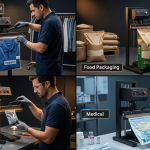

Vacuum sealing is not exclusive to food. Across electronics manufacturing, medical device production, textile logistics, and
industrial parts storage, vacuum packaging solves the same core problem as it does in food — preventing environmental
degradation — just with different enemies: moisture, oxidation, dust, electrostatic discharge, and compression damage.
Non-Food Application Matrix:
Electronics & PCB Manufacturing
Problem: Moisture absorption causes PCB delamination, component corrosion, and solder joint failure. Static discharge during
handling destroys sensitive ICs. Vacuum Sealing Role: Moisture barrier packaging for components in transit and storage; ESD
safe vacuum bags protect against electrostatic damage. Machine Requirements:
Clean, dry operating environment (no food residue contamination risk)
Vacuum level: -80 to -90 kPa is sufficient
Bag type: Anti-static (ESD-safe) aluminum foil laminate or metalized PE bags
Chamber size: matched to PCB or component tray dimensions
Do not use oil pump machines without intake filters in dusty fab environments
Medical Device & Sterile Product Packaging
Problem: Sterile products must maintain their sterile barrier from point of manufacture to point of use. Packaging integrity is a
regulatory requirement. Vacuum Sealing Role: Creates a tamper-evident, hermetic secondary barrier for pre-sterilized
instruments, syringes, wound dressings, and diagnostic kits. Machine Requirements:
Chamber machines with validated, documented sealing parameters (seal width, temperature, dwell time)
Machines must support IQ/OQ/PQ validation documentation for GMP compliance
Bag type: Medical-grade Tyvek/PE pouches or multi-layer foil laminates
Vacuum level: -70 to -85 kPa (full vacuum may crush delicate sterile packaging)
Certification required: CE Medical, ISO 11607 bag compatibility
Textile & Apparel Logistics
Problem: Bulk garments, bedding, and outdoor gear occupy excessive shipping volume. Moisture causes mildew in long
distance ocean freight. Vacuum Sealing Role: Compression packaging reduces carton volume by 50–70%, dramatically cutting
freight cost per unit. Moisture barrier prevents mildew on 30–60 day sea shipments. Machine Requirements:
Large chamber or external nozzle machines suited to oversized, soft goods
Vacuum level: -60 to -75 kPa is sufficient for compression (no need for maximum vacuum)
Bag type: PE compression vacuum bags; resealable valve bags for retail-packaged sets
Priority: large chamber width and bag length clearance over maximum vacuum depth
Industrial Parts & MRO Components
Problem: Steel, iron, and copper parts oxidize rapidly in humid warehouses. Long-term storage of spare parts (bearings, seals,
fasteners) requires rust prevention. Vacuum Sealing Role: Removes atmospheric oxygen that drives oxidation; creates a
hermetic barrier that eliminates need for oil coatings or desiccant-only solutions. Machine Requirements:
Heavy-duty chamber or external machines that can handle irregular part shapes
Vacuum level: ≥ -85 kPa for metal parts (higher oxygen removal = slower oxidation)
Bag type: High-barrier metalized foil / aluminum laminate with VCI (Volatile Corrosion Inhibitor) inner layer
Consider adding desiccant packet inside bag before sealing for maximum protection
Universal Rules for Non-Food Vacuum Sealing:
- Never mix food and non-food applications in the same machine — cross-contamination and pump oil contamination are
difficult to reverse - Match bag barrier rating to your threat — moisture, oxygen, ESD, or UV have different optimal film constructions
- Vacuum level does not need to be maximum — over-vacuuming crushes delicate components or distorts soft goods;
target the minimum level that achieves your preservation goal