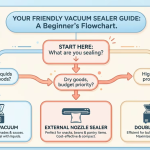
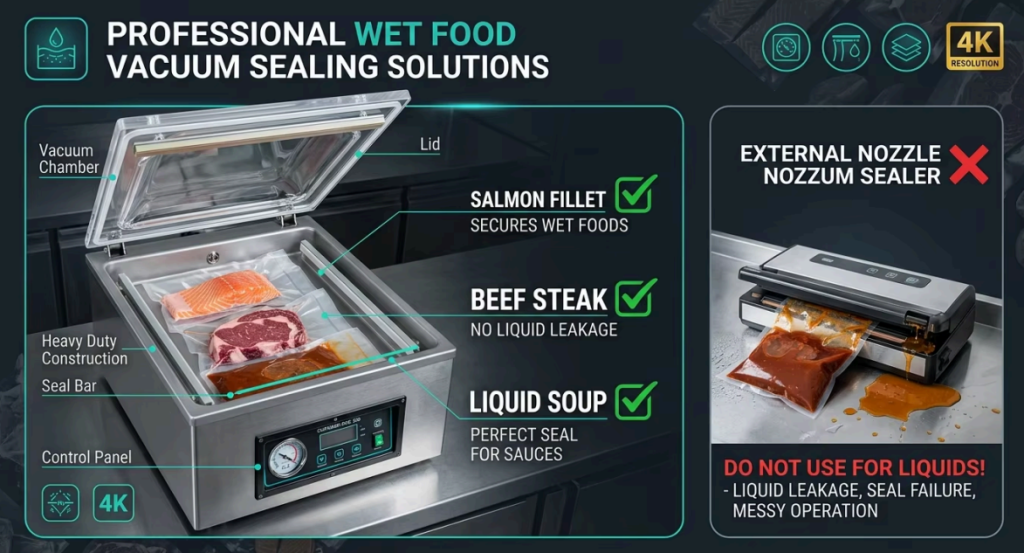
The short answer: a chamber vacuum sealer — no exceptions.
If your product contains any free liquid, marinade, brine, fat, or moisture that could migrate under pressure differential, an
external nozzle vacuum sealer will fail every time. Here’s the physics behind why:
Why External Sealers Cannot Handle Wet Foods: An external (nozzle-type) sealer creates a pressure differential between the
bag interior (near-vacuum) and the bag exterior (atmospheric, ~101 kPa). For a bag of marinated chicken thighs, this means the
liquid inside the bag is subjected to a rapid pressure drop. Liquids at near-vacuum and room temperature will begin to
vaporize and foam, getting drawn into the vacuum pump — clogging filters, contaminating pump oil, and destroying the
machine within weeks.
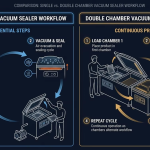
Why Chamber Vacuum Sealers Are the Only Solution: In a chamber machine, the entire sealed environment — including the
bag exterior — reaches the same vacuum level simultaneously. There is zero pressure differential across the bag walls. The
liquid inside the bag remains stable, does not vaporize, and the pump only ever pulls clean, dry air.
Product Compatibility Guide
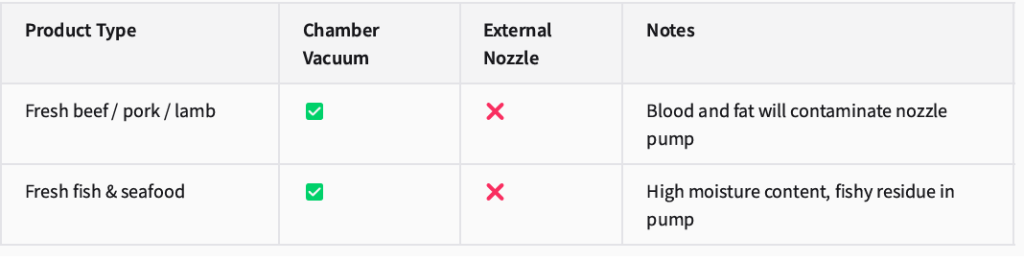
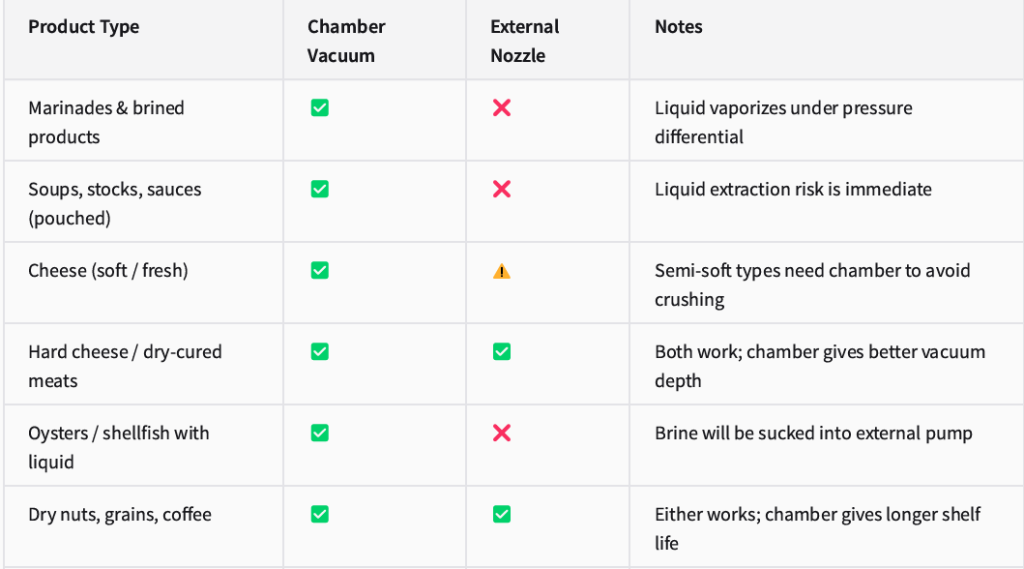
Recommended YGPACK Configuration for Wet Food Operations:
Machine type: Single or double chamber vacuum sealer
Target vacuum level: ≥ -90 kPa (rotary vane oil pump required)
Sealing bar width: 10mm minimum for liquid-adjacent seals
Optional: Gas flush (N₂/ CO₂) for modified atmosphere packaging of high-value cuts
Bag specification: PA/PE co-extruded film, minimum 70μm for fresh meat; 90μm for seafood with bones or shells
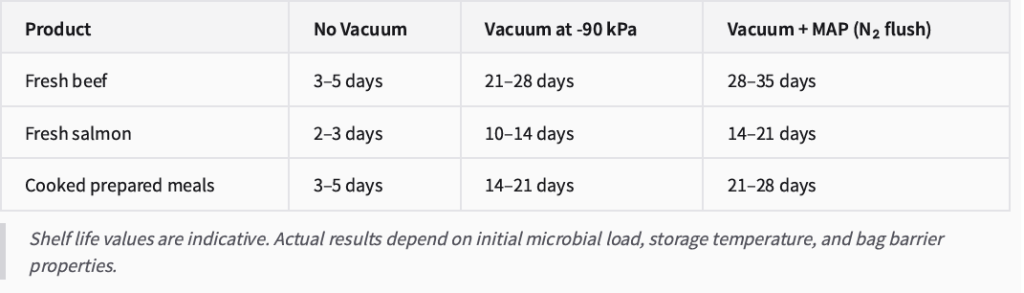
Shelf Life Impact (Refrigerated, 2–4°C):